
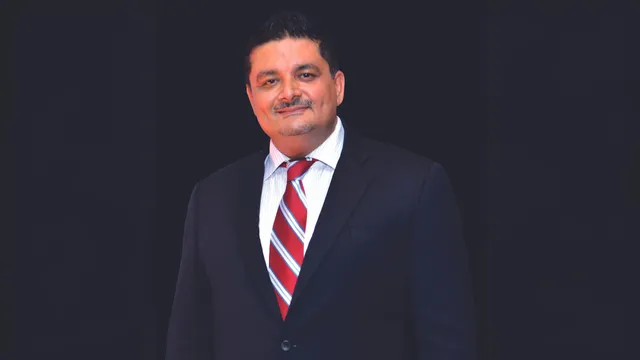
India’s spirits market has changed dramatically over the past three decades. For international brands, entering the India spirits market today looks nothing like it did in the 1990s. And according to Sumedh Singh Mandla, Founder & CEO of SHVE Global and a member of the IGSA judging panel, the biggest shift is not regulation, distribution or the sheer number of brands on the shelf. It is the consumer.
Who Is Sumedh Singh Mandla?
Sumedh Singh Mandla, DipWSET, is the Founder & CEO of SHVE Global and a judge on the India Global Spirits Awards panel. He is a board-level leader with more than 30 years of experience scaling alcoholic beverages, food and beverage, hospitality and luxury consumer goods businesses across South Asia and international markets.
He has held full P&L responsibility for multi-entity operations, launched more than 300 premium products and built brands with organisations including Grover Zampa Vineyards, Aspri Spirits, VBev, AWS Global and Marriott International.
- Current role: Founder & CEO, SHVE Global
- Qualifications: WSET Diploma in Wines & Spirits (DipWSET); IICA-certified Independent Director
- Industry leadership: Former Chairman of the Asian Wine Producers Association
- Experience: 30+ years in alcobev, hospitality and consumer brands; 300+ premium product launches
That dual experience shapes his perspective: he has built brands, and he has judged what makes them work in the real world. He brings, in the words of his IGSA judge profile, a producer’s palate and a strategist’s read on what wins in market.
When Sumedh joined the Taj Group in the mid-1990s, availability drove the Indian alcobev industry. Today he sees a far more informed drinker. This consumer actively seeks out knowledge, from single malts and craft gin to new flavour profiles and the story behind each bottle.
As part of Meet the Panel Behind IGSA, our series on the experts behind the India Global Spirits Awards judging panel, the IGSA team sat down with Sumedh. We wanted his view on the market today. We also wanted to know what international producers should understand before building a presence here.
The conversation was candid, practical and, at times, deliberately challenging. That is exactly what makes his view on India so valuable.
How has the Indian spirits consumer changed?
We began by asking Sumedh what feels fundamentally different about the market today. His answer took us back to the mid-1990s and the start of his career with the Taj Group.
“When I started at Taj Group in the mid-90s, alcobev in India was a licensing game. You fought for shelf space and a permit, not for the consumer’s attention.”
The consumer landscape has changed completely. Sumedh describes a clear shift. People once drank what was available; now they actively seek out category knowledge. Single malts, craft gin, tequila, flavoured drinks and terroir-driven wine all point to a growing curiosity about what is in the glass and where it comes from.
One observation makes the generational change especially vivid:
“Thirty years ago nobody asked what a spirit’s expression was; now a 25-year-old in Bangalore will ask about mash bills.”
For Sumedh, this move from availability-led to discernment-led buying ranks among the biggest changes in the Indian drinks industry. It also makes the country far more interesting to international producers. They want markets where consumers engage with what they drink, and India now fits that description.
Why international brands are entering the India spirits market
One idea came up again and again: you have to respect India’s complexity. Producers often talk about entering “the Indian market” as if the country were one unified commercial environment. Sumedh’s experience suggests this assumption causes problems from day one. India’s opportunity is not only about size. The market keeps growing more sophisticated, and consumers increasingly want to engage with the story, identity and craft behind a spirit. We explore this shift further in India: The Emerging Frontier for Global Spirits Brands.
He has built distribution across 23 states and seen first-hand how differently they operate. Excise policies, taxation, registrations, label compliance, routes to market, retail structures and consumer behaviour can all vary sharply from one state to the next.
“That India is one market. It isn’t.”
He recalled a globally respected brand that assumed success in Mumbai would carry the whole country. It did not. Pricing that worked under one state’s duty structure became commercially unviable just a few states away.
That experience shapes a very different way of thinking about market entry:
“Global brands need a federation strategy, not a national one.”
For international brands, this distinction matters. Do not ask how to launch across all of India at once. Ask instead which states offer the right mix of consumer, pricing, distribution and channel to begin with.
Entering the India spirits market: when great spirits fail, it is rarely the liquid
We put a familiar scenario to Sumedh. A brand has a strong product, a solid reputation and recognition abroad, yet it struggles to gain traction in India. Where does the problem usually lie? Is it the liquid, the positioning, the pricing, the distributor or the entry strategy?
“Rarely the liquid.”
In his experience, the entry strategy is far more often the culprit. Brands arrive with a global playbook and a distributor, but skip the state-by-state regulatory and channel mapping India demands. Pricing then becomes a second obstacle, because global prestige positioning rarely accounts for the country’s duty structure.
This frustrates producers, because the product itself may be excellent. The consumer simply never gets a fair chance to try it at a sensible price, through the right channel.
“Get the entry architecture wrong, and even a genuinely excellent liquid never gets a fair trial with the consumer.”
It is a useful reminder. In any spirits market, the liquid alone rarely decides success. The strategy around that liquid matters just as much.
Think state by state when entering the India spirits market
So if India is not one market, where should an international producer begin? Sumedh answers from experience, not theory. When he ran pan-India businesses, he expanded state by state rather than through a single national rollout. He tested the model in a handful of markets first, then scaled only once the evidence proved it worked.
His advice is straightforward:
“Treat each state like its own export market under one flag.”
For a brand considering India, that means picking a few states where the price point, channel mix and consumer profile line up. Do not chase a national presence straight away. Sumedh believes producers should prove the model first, then build from there.
His more direct advice to producers is just as clear:
“Enter with a state or two, not a country.”
This takes more patience. But it lets a brand learn from the market before it commits serious resources to a wider rollout.
What does premium really mean in India?
People often call premiumisation one of the biggest opportunities in India’s beverage industry. But we wanted to know what premium actually means to the consumer.
For Sumedh, it goes well beyond a better liquid or a higher price tag.
“Indian premiumisation is as much about narrative and occasion as liquid quality.”
Consumers trading up want something they can understand and talk about. Heritage, regionality, craftsmanship, awards and limited releases all feed the story behind a premium product. Drinking in India remains deeply social, so the bottle itself becomes part of the occasion.
“Price alone signals nothing; price backed by a credible story, visible quality cues and the right occasion-fit is what earns the trade-up.”
For international brands, that means you cannot copy premium positioning from another country. The product has to fit the Indian consumer’s expectations, occasions and sense of value.
What makes a brand have “something”?
We then moved from the market to the brand itself. When Sumedh meets a new spirit, what tells him it has something special, even before he sees a single sales figure?
His answer was one word: coherence.
“When the liquid, the packaging, the pricing and the story are all telling the same truth about the brand, that’s the tell.”
It is a simple idea, and it matters more every year as brands multiply and compete for attention. A technically impressive liquid may draw a first look. But if the packaging says one thing and the price says another, or the story does not match the experience, the proposition quickly confuses people.
Sumedh has evaluated hundreds of spirits, beer and wine brands. He finds that the ones that eventually work in-market are rarely the flashiest. More often, they carry a clear point of view that stays consistent across every touchpoint.
A medal is not the finish line
This brought our conversation naturally to the philosophy behind the India Global Spirits Awards. IGSA weighs two things at once: the technical quality of the spirit and its relevance to the Indian market. We asked Sumedh why both sides matter, rather than judging a spirit on liquid quality alone.
His response was one of the strongest observations of our conversation:
“Because a medal that doesn’t convert on an Indian shelf helps nobody.”
Sumedh has watched technically excellent, internationally awarded spirits struggle in India. The pricing, the channel fit or the connection with local culture simply did not suit the market.
“The trophy didn’t translate into trade acceptance.”
That distinction sits at the heart of IGSA. Recognition for technical quality carries real value. Yet producers considering India also need to see how their product fits the realities on the ground.
An international competition tells a producer how a spirit performs against a global standard. An India-focused competition adds another layer. It considers the context in which that spirit will actually be sold and enjoyed.
What successful brands have in common
Sumedh has launched more than 300 products across three decades. So we asked what the brands that genuinely succeed in India share.
His answer was not about one category, marketing strategy or distribution model.
“Patience, local partnership and organic brand building.”
He points to a few fundamentals: proper regulatory homework, the right distribution partner, a pricing ladder built specifically for India, and leadership willing to let the India strategy differ from the global one.
That last point challenges many international companies. Entering a new market need not change what makes a brand special. But it often changes how the brand presents itself, prices itself and builds its business.
The brands that struggle, Sumedh says, are usually the ones that try to shortcut this groundwork.
The advice founders entering the India spirits market may not want to hear
Towards the end of our conversation, we asked Sumedh a deliberately uncomfortable question. If he could sit with the founder of an international spirits brand before they entered India, and tell them one thing they probably did not want to hear, what would it be?
His response was blunt:
“India will not reward your global brand deck.”
The market, he says, does not care how well a brand performed in London or Singapore. Once it lands in India, the market tests it from the very first day.
Sumedh believes the first 18 months should serve as a period of market discovery, not a victory lap. Founders must also accept that their global positioning may need real reworking, not a simple translation for India.
That can unsettle an established international brand. Yet it may also be one of the most important parts of adapting successfully to a new market.
Why India needs an India-focused spirits competition
We ended our conversation by asking Sumedh a fair question. Why does India need its own spirits competition when respected international ones already exist?
His answer goes straight to the distinction behind IGSA.
“Global competitions judge a spirit against the world. India needs a competition that also asks a simpler question: will this actually sell here?”
Having both built brands and judged them, Sumedh has seen technically brilliant spirits struggle commercially. They were priced or positioned wrongly for India.
“A medal tells you the liquid is good. It doesn’t tell you that.”
For him, IGSA’s opportunity is to combine rigorous technical judging with an honest, on-ground read of Indian market viability. This does not replace technical quality. It adds another dimension to the question of what happens after the medal.
What to understand before entering the India spirits market
Perhaps the biggest takeaway is simple. Entering the India spirits market is not a straightforward export exercise. The opportunity is significant, but seizing it takes much more than sizing the market. Producers need to understand the differences between states, the regulatory environment, pricing structures, routes to market, consumer expectations, and the occasions where their product can genuinely find a place.
Most importantly, they need to be ready to learn. A great liquid matters. A strong brand matters. A compelling story matters. But as Sumedh’s experience shows, none of them can replace a real understanding of the market a brand is trying to win.
That is exactly why conversations like this matter to the India Global Spirits Awards. The people behind a spirits competition bring more than tasting experience to the table. They bring years of working with brands, consumers, markets and the hard realities of building a business.
For producers looking towards India, the first question should not be how quickly they can enter. It should be how well they understand where they are entering.
Meet Sumedh Singh Mandla and the IGSA Judging Panel
Want to know more about Sumedh Singh Mandla and the experts evaluating every entry? Visit Meet Our Judges to see the full IGSA panel, learn how entries are assessed in our tasting process, or register to enter your spirit in the India Global Spirits Awards.
About the series
Meet the Panel Behind IGSA is an ongoing editorial series from the India Global Spirits Awards. It brings readers closer to the professionals behind our judging panel.
Rather than simply presenting judge biographies, the series explores how experienced spirits professionals think about quality, consumers, brands, market entry and the changing global drinks industry.
Through these conversations, we want producers, distillers and spirits professionals to hear directly from the people who bring their experience to the IGSA judging process.
Part 2 features Sumedh Singh Mandla and his perspective on India’s evolving spirits market, premiumisation and what international brands need to grasp before entering the India spirits market.
This article is based on an interview conducted by the India Global Spirits Awards team with Sumedh Singh Mandla.
Missed Part 1? Read our interview with IGSA Master Judge Tobias Gorn: Inside the Mind of a Drinks Specialist.